
Mosquito Control in Carpenter Corridor
Mosquito Control for Carpenter Corridor homes - local conditions, a clear process, and one call to get it started.
Around Carpenter Road, the calls follow a rhythm the whole neighborhood recognizes.
Mosquitoes in Carpenter Corridor are not just a backyard nuisance. Stanislaus County runs two mosquito abatement districts for a reason: Culex mosquitoes here carry West Nile virus every year, and the invasive Aedes aegypti - the daytime-biting ankle biter - has established itself across the city.
The Carpenter Corridor follows Carpenter Road down Modesto's west side, where the residential grid thins into small farms, nurseries and orchard blocks. It is the in-between country - city services on one side of the fence, working agriculture on the other.
This part of the Valley has its own version of the problem. Older homes on large lots plus small farms and nursery properties with outbuildings and equipment storage - and that shapes the pest work directly. Farm-edge living means rodents, ground squirrels and orchard ants as standing pressure, with black widows in every equipment shed. For mosquito control in Carpenter Corridor, a yard-level source walk here finds breeding spots a drive-by never would.
Signs Carpenter Corridor Homes Need Mosquito Control
Evening swarms near water
Clouds of mosquitoes at dusk near canals, ponds or pools point to Culex breeding nearby.
Bites despite repellent and screens
Persistent biting usually means a breeding site within a short flight - often in the yard itself.
Daytime ankle bites in the yard
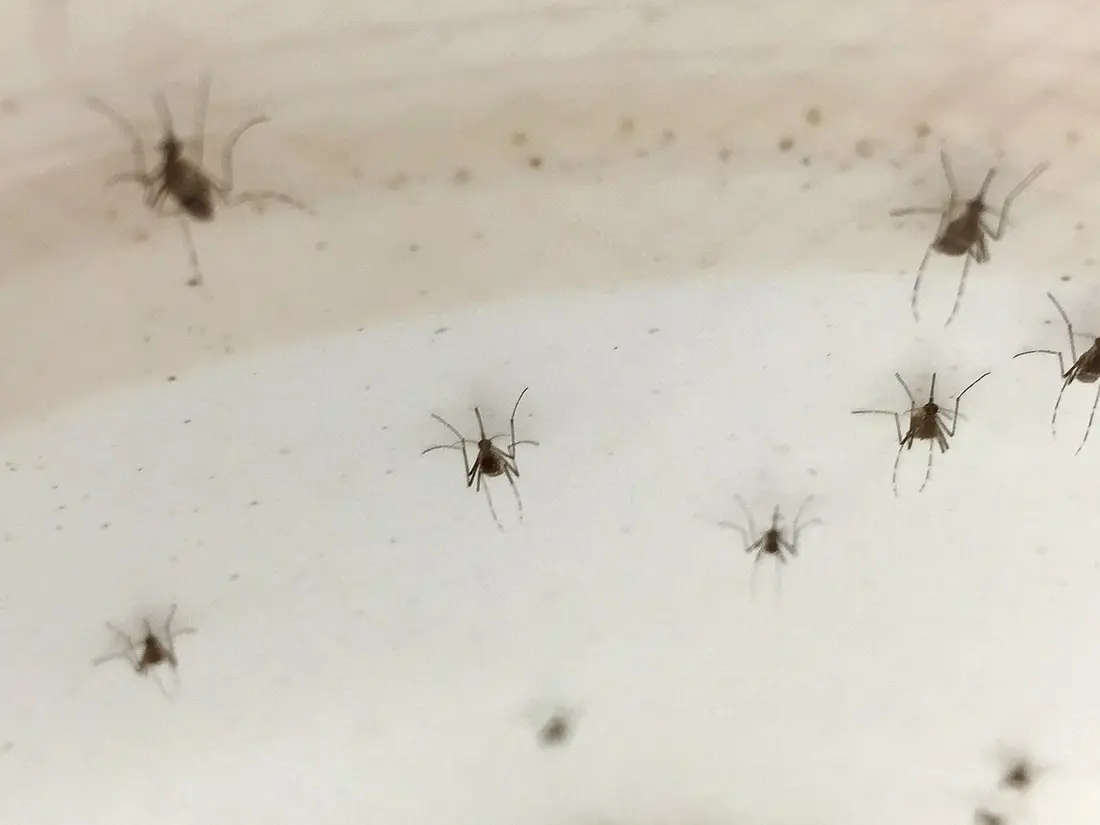
Bites around ankles and legs during the day are the signature of Aedes aegypti, the invasive container-breeding mosquito.
Why This Problem Runs in Carpenter Corridor
Aedes aegypti needs almost no water: a plant saucer, a clogged drain, a tarp fold, a child's toy. Females lay eggs in containers around homes, and the eggs survive dry spells to hatch at the next watering - which is why this mosquito is a per-yard problem.
Farm-edge living means rodents, ground squirrels and orchard ants as standing pressure, with black widows in every equipment shed. Irrigation water on both sides of the fence keeps mosquitoes and subterranean termites in season all year.
In Carpenter Corridor, that plays out street by street - and the weekly container walk on the homeowner's side carries half the result. The pattern in Carpenter Corridor rewards the homes that seal in the off-season; the rest meet the same problem at its seasonal peak.
Deep summer rearranges the pest map weekly. Heat drives ants along the irrigation lines from bed to bed, roaches abandon cooling outdoor harborage for the drains, and yellowjackets turn aggressive around any sweet liquid left outdoors. It is the season of small disciplines with outsized returns: lids on trash, drips repaired within days, pet water refreshed and moved, and service visits that never slip - because in July and August, a two-week gap is an open border.
Before the visit, clear access to the areas involved - sinks, attic hatch, garage corners, the sides of the house - and secure pets. During the visit, expect a plain-English explanation of findings; after it, a short list of the fixes on your side that keep the problem from restarting.
In this part of the Valley the season is not background - it is the schedule. Carpenter Corridor homes that work a season ahead stay ahead.
Before you call, a five-minute walk pays for itself: note where you have seen activity, check for drips under sinks, and look at the attic hatch and the vents. That list, given on the call, gets the right equipment on the truck.

How Mosquito Control Works in Carpenter Corridor
The full step-by-step process for this service - inspection, treatment, sealing and follow-up - is laid out on the main Mosquito Control page. In Carpenter Corridor the same sequence runs with the local map in hand: the entry points around Carpenter Road, the housing pattern described above, and the pest pressure this neighborhood actually carries.
The Carpenter Corridor Angle
Ask anyone who services Carpenter Corridor and they will tell you the pattern repeats: pressure builds at the edges, then follows water and shelter toward the houses. Where the pest pressure lands hardest follows the housing. Older homes on large lots plus small farms and nursery properties with outbuildings and equipment storage.
What the neighborhood grows, hosts and shelters fills in the rest. Farm-edge living means rodents, ground squirrels and orchard ants as standing pressure, with black widows in every equipment shed. Irrigation water on both sides of the fence keeps mosquitoes and subterranean termites in season all year. That is why mosquito control in Carpenter Corridor is planned from inspection rather than from a script - the visit reads this map before any treatment is chosen.
Carpenter Corridor does not sit alone on the map. It trades pest pressure daily with Kansas Avenue District, West Modesto and College Area - the same canals, corridors and commutes connect them, and the same seasonal pushes move through all of them within the same few weeks. For homeowners, the useful takeaway is simple: your block's pattern is knowable, and the work follows the pattern.
On the route map, Carpenter Corridor sits in the modesto neighborhood group, ZIP 95351 - close enough to Kansas Avenue District, West Modesto that crews work them on the same runs. Which means mosquito control here is scheduled with the neighborhood's pattern in mind, not dropped into it cold.
On paper Carpenter Corridor is ZIP 95351; on the ground it is the blocks around Carpenter Road, shading into Kansas Avenue District, West Modesto, College Area, Standiford District, with the habits of a modesto neighborhood neighborhood - its own attic profile, its own irrigation rhythm, its own repeat addresses. That is the level this work is planned at.
Prevention That Helps in Carpenter Corridor
- Keep pool water circulating and chlorinated, or report a neglected pool to the abatement district.
- Add mosquitofish to ornamental ponds - the local district provides them within its boundaries.
- Dump and scrub plant saucers, buckets and toys weekly - eggs stick to the sides.
Older homes on large lots plus small farms and nursery properties with outbuildings and equipment storage.
Keep Exploring
Mosquito Control nearby:
- Mosquito Control in Kansas Avenue District
- Mosquito Control in West Modesto
- Mosquito Control in College Area
- Mosquito Control in Standiford District
More services in Carpenter Corridor:
- Flea & Tick Control in Carpenter Corridor
- Emergency Pest Control in Carpenter Corridor
- Rodent Control in Carpenter Corridor
- Cockroach Control in Carpenter Corridor
See the full pest control page for Carpenter Corridor and the Mosquito Control overview for Modesto.
Mosquito Control in Carpenter Corridor - Questions
Is mosquito treatment in Carpenter Corridor safe around pools, pets and gardens?
Treatments are applied to breeding water and resting vegetation, not to pool water or edible plants, and your technician will walk through any precautions for your specific yard before starting.
Can mosquito control in Carpenter Corridor cover the whole season?
A season program combines larvicide for standing water, resting-area treatments and your own weekly source removal. No service can seal a yard completely, but treated yards are dramatically quieter than untreated ones.
How is Mosquito Control priced for a home in Carpenter Corridor?
By the finding, not the address: what the inspection confirms, how much of the home is involved, and what the sealing or follow-up list looks like. You approve the scope and the number before any work begins, and the written quote is the number the work follows.
Ants in the Kitchen, Scratches in the Attic or Bites in the Night?
One call connects you with a pest control professional serving Modesto and the surrounding Valley communities - inspection, treatment, exclusion and prevention.
📞 Call Now