
Mosquito Control in Patterson
Mosquito Control for Patterson homes - local conditions, a clear process, and one call to get it started.
The Patterson pattern for this work is set by its streets - mature blocks, Valley edges and water never far away.
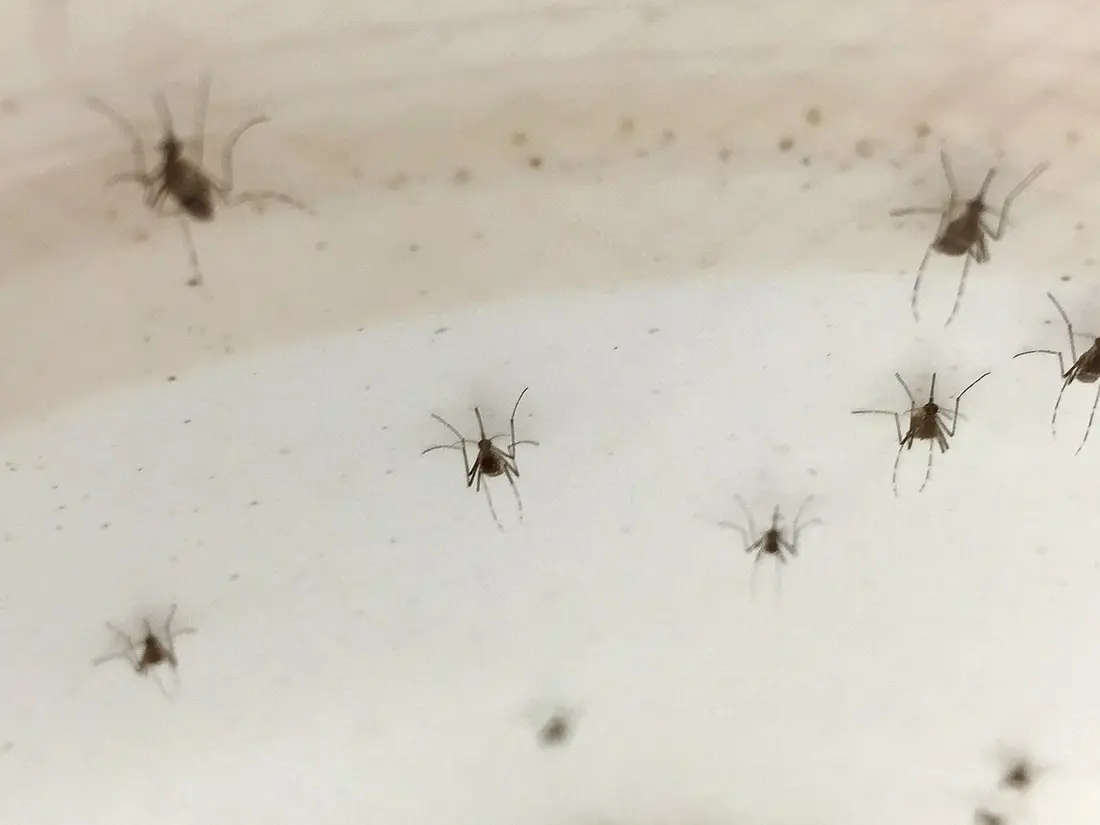
Modesto's mosquitoes come in two waves: the evening Culex that breed in canals, ponds and neglected pools, and Aedes aegypti, the container breeder that bites ankles in broad daylight in Patterson yards. Control means treating both habitats.
Patterson is the Apricot Capital of the World, a planned 1910s city on the county's west side where Interstate 5 meets the Diablo Range foothills. Its palm-lined original grid, its orchards and its fast-growing warehouse district make it Stanislaus County's western anchor.
This part of the Valley has its own version of the problem. A historic core of early-1900s homes, postwar neighborhoods and large new subdivisions near the freeway - and that shapes the pest work directly. West-side winds and orchard edges keep rodents and ants pressing into the subdivisions, and the warehouse district adds stored-product and rodent pressure of its own. For mosquito control in Patterson, a yard-level source walk here finds breeding spots a drive-by never would.
Signs Patterson Homes Need Mosquito Control
Daytime ankle bites in the yard
Bites around ankles and legs during the day are the signature of Aedes aegypti, the invasive container-breeding mosquito.
Evening swarms near water
Clouds of mosquitoes at dusk near canals, ponds or pools point to Culex breeding nearby.
Larvae in standing water
Wiggling larvae in plant saucers, buckets, fountains or pool water mean breeding on your own property.
Why This Problem Runs in Patterson
Culex mosquitoes breed bigger: canals, flood-control basins, neglected pools, ornamental ponds and standing irrigation water. The abatement districts treat the public water; the water on your property is yours to manage.
West-side winds and orchard edges keep rodents and ants pressing into the subdivisions, and the warehouse district adds stored-product and rodent pressure of its own. The historic core carries the county's usual load of termites in old framing.
In Patterson, that plays out street by street - and the weekly container walk on the homeowner's side carries half the result. The pattern in Patterson rewards the homes that seal in the off-season; the rest meet the same problem at its seasonal peak.
Fall's second wave is the quiet one: field mice test foundation gaps as the nights cool, spiders move to the sheltered walls and window frames, and drywood termite swarmers ride the warm October afternoons into attic vents. Stored summer gear returning to garages carries hitchhikers in both directions. The fall habit that pays best is the fifteen-minute walk - vents, gaps, woodpiles, stored boxes - done before the first rain rather than after the first scratching sound.
Homeowners are often surprised by how much of the visit is looking rather than spraying. That inspection time is the work: it is what separates a treatment matched to your actual problem from a generic spray that misses it. Ask questions - a good technician can show you exactly what they found.
The turning season rearranges harborage in Patterson: what sheltered pests outdoors in the last season pushes them toward foundations, vents and rooflines in this one.
Before you call, a five-minute walk pays for itself: note where you have seen activity, check for drips under sinks, and look at the attic hatch and the vents. That list, given on the call, gets the right equipment on the truck.

How Mosquito Control Works in Patterson
The full step-by-step process for this service - inspection, treatment, sealing and follow-up - is laid out on the main Mosquito Control page. In Patterson the same sequence runs with the local map in hand: the entry points around the apricot orchards around Patterson, the housing pattern described above, and the pest pressure this neighborhood actually carries.
The Patterson Angle
Ask anyone who services Patterson and they will tell you the pattern repeats: pressure builds at the edges, then follows water and shelter toward the houses. Construction here decides the entry map. A historic core of early-1900s homes, postwar neighborhoods and large new subdivisions near the freeway.
What the neighborhood grows, hosts and shelters fills in the rest. West-side winds and orchard edges keep rodents and ants pressing into the subdivisions, and the warehouse district adds stored-product and rodent pressure of its own. The historic core carries the county's usual load of termites in old framing. The result, when the work follows the map, is a quieter house and a shorter list of surprises next season.
Patterson does not sit alone on the map. It trades pest pressure daily with Turlock, Hughson and Ceres - the same canals, corridors and commutes connect them, and the same seasonal pushes move through all of them within the same few weeks. For homeowners, the useful takeaway is simple: your block's pattern is knowable, and the work follows the pattern.
On the route map, Patterson sits in the stanislaus county city group, ZIP 95363 - close enough to Turlock, Hughson that crews work them on the same runs. The route view is also the honest one: it is how the pressure actually moves through Patterson across a season.
Ask for the Patterson dossier and it starts with geography: ZIP 95363, the apricot orchards around Patterson as the anchor point, and a working border shared with Turlock, Hughson, Ceres, Empire. As a stanislaus county city area, its housing age and water pattern write the first draft of every pest plan.
Prevention That Helps in Patterson
- Fix leaky faucets and irrigation that leaves standing puddles.
- Keep pool water circulating and chlorinated, or report a neglected pool to the abatement district.
- Keep window and door screens in good repair, especially on the patio side.
A historic core of early-1900s homes, postwar neighborhoods and large new subdivisions near the freeway.
Keep Exploring
Mosquito Control nearby:
- Mosquito Control in Turlock
- Mosquito Control in Hughson
- Mosquito Control in Ceres
- Mosquito Control in Empire
More services in Patterson:
- Bed Bug Treatment in Patterson
- Spider Control in Patterson
- Flea & Tick Control in Patterson
- Wasp & Bee Removal in Patterson
See the full pest control page for Patterson and the Mosquito Control overview for Modesto.
Mosquito Control in Patterson - Questions
Why are mosquitoes so bad in Patterson this year?
Heat plus water. Modesto's irrigation season keeps breeding water everywhere, and warm temperatures speed mosquito breeding to about a week per generation. If a neighbor has a neglected pool, the whole block feels it.
Can mosquito control in Patterson cover the whole season?
A season program combines larvicide for standing water, resting-area treatments and your own weekly source removal. No service can seal a yard completely, but treated yards are dramatically quieter than untreated ones.
What should Patterson homeowners have ready before a Mosquito Control visit?
Access and information. Clear the way to the attic hatch, the water heater, the meter boxes and both sides of the foundation, secure pets, and have the pattern written down - when it started, where it concentrates, and what changed. That five minutes of prep is worth a second visit.
Ants in the Kitchen, Scratches in the Attic or Bites in the Night?
One call connects you with a pest control professional serving Modesto and the surrounding Valley communities - inspection, treatment, exclusion and prevention.
📞 Call Now